







- 3
- 24.08.2023 08:18:00
- 3 min read
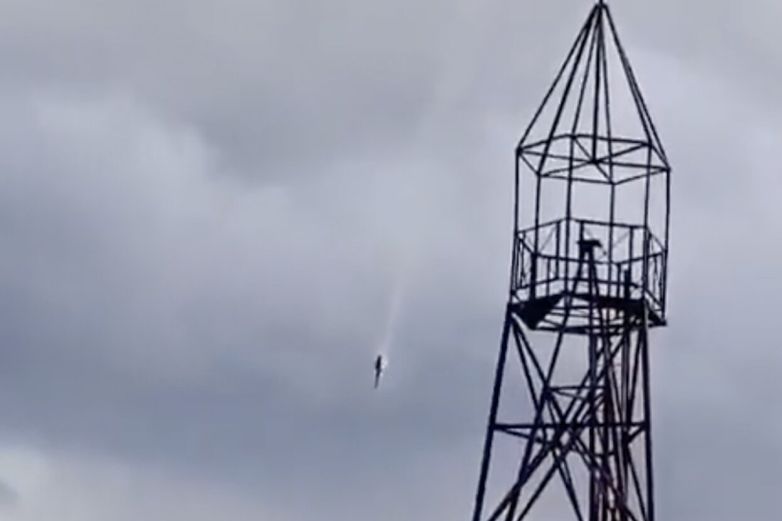
Was the explosion inside or outside the plane (i.e. from a missile strike)? On the evening of August 23, a plane belonging to Yevgeny Prigozhin crashed near the village of Kujenkino, Tver region. Videos shot by local residents who witnessed the incident were circulated on social networks. The images show the plane completely losing control and falling to the ground in pieces. Meanwhile, at least one engine is heard still running, and the plane is seen leaving a trail of smoke. All this clearly indicates that there was an explosion before the collapse, Medusa wrote. Only one question remains: was the explosion inside the plane or outside (that is, as a result of a missile strike)? Representatives of the federal air transport agency "Rosaviatsiya" are already saying that the plane was "blown up", that is, it was not shot down. According to other sources, all options are being considered. There is evidence against the assumption that it was detonated from inside the plane: - One of the videos shows a cloud similar to the inversion trace of an anti-aircraft missile; - In the video, witnesses say that there were two explosions before the plane crashed. Usually, firing two missiles against one target is widely used in practice and increases the probability of destroying the target. - In some parts of the plane, holes similar to the traces of an anti-aircraft missile warhead are visible. But the quality of the image is low, so it is impossible to accurately assess the nature of the traces. There are no traces of the pieces that fell apart from the plane. There is also evidence supporting the assumption that it was detonated from inside the plane: - According to Flightradar24, the plane climbed to an altitude of 28,000 feet (more than 8.5 kilometers) before crashing. At such an altitude, any defense system will not be able to shoot down the plane. In particular, mobile anti-aircraft missile systems (theoretically, bombers could use it) and even all short-range air defense systems are not capable of this. At least a medium-range complex (for example, "Buk") is required, which should be located close to the runway where the aircraft will fly. - The missiles of such complexes cause serious damage to the aircraft. A 70-kilogram warhead will have 7,000 small elements. As a result of its impact, an aircraft of such a size should have been crushed. The question of the cause of the explosion is politically important. If the plane was still shot down by an anti-aircraft missile, then it can be said that the Russian security forces "had a hand" in this. "Explosion on board" allows almost any version (but does not exclude the possible intervention of the Russian authorities). According to the rules of the International Civil Aviation Organization (ICAO), the crash must be investigated by a local authority (in Russia - the International Aviation Committee) with the participation of the Embraer S.A. (Brazilian) company that manufactured the plane.