







- 0
- 08.04.2026 12:00:00
- 2 min read
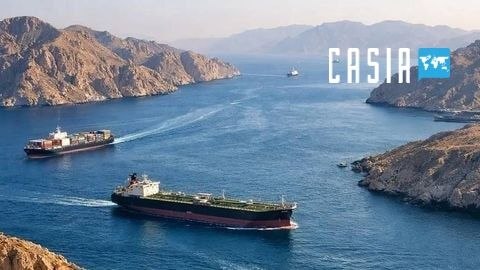
U.S. President Donald Trump has announced a two-week ceasefire amid escalating tensions with Iran. Under the agreement, Iran resumes the movement of commercial ships through the Strait of Hormuz, while the United States temporarily suspends military operations.
This agreement has already had a noticeable impact on the global energy market, as the Strait of Hormuz is one of the most critical routes in global oil logistics.
Meanwhile, according to a European analytical center — the German-Russian Chamber of Foreign Trade — Russia continues to generate record revenues from energy exports. Their estimates suggest that income from oil, gas, and fertilizer exports has already exceeded €10 billion per month.
The organization’s representatives believe that rising global prices are contributing to additional profits for Russia’s raw material exports. Some forecasts suggest that if oil prices remain high, Russia could gain tens of billions of dollars in extra revenue over the year.
At the same time, according to some analysts in the U.S. financial sector, these additional revenues may turn out to be lower than expected. Washington estimates that Russia’s extra profit could be limited to just a few billion dollars.
Experts note that any tension in the Strait of Hormuz directly affects global energy prices, causing significant fluctuations not only in the Middle East but also in the economies of Europe and Asia.