








- 5
- 28.03.2023 08:55:00
- 2 min read
An international conference on this topic will be held in Dushanbe
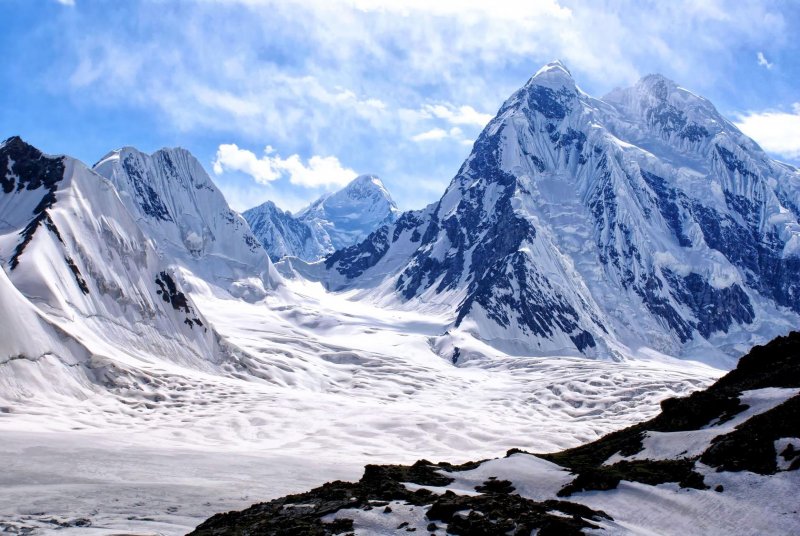
The International scientific and Practical conference "The Impact of climate change on glaciers and the importance of declaring 2025 the International Year of Glacier Conservation" will be held on March 28 in Dushanbe. This was reported to the correspondent of NIAT "Khovar" at the State Scientific Institution "Center for the Study of Glaciers" of the National Academy of Sciences of Tajikistan.
Domestic and foreign scientists and experts will participate in its work in online and offline formats.
The conference will become an important platform for discussing such topics as: assessment of the process of melting glaciers in the context of global warming, identification of the main areas of cooperation at the regional and international level to achieve innovative ways of studying glaciers, organization of a platform for the exchange of scientific information about the state of glaciers and the development of measures for the study and protection of glaciers and others.
Scientists will consider new modern methods of studying the cryosphere, glaciers and snow cover, as well as the possibility of natural disasters associated with glaciers, glacial lakes, snow cover, and ways to reduce the damage caused by them.
"Climate change has already significantly affected many regions of our planet, such as the Arctic, Antarctica and Central Asia. According to satellite measurements, the ice sheet in the Arctic Ocean is constantly decreasing, during 2019-2021 it reached its maximum. Glaciers in the mountains of Central Asia and other regions of the world are rapidly shrinking and melting, as a result of which water shortages may increase, which will negatively affect ecosystems, food production and human health," the Glacier Research Center noted.
Recall that, according to research data, by 2030-2050, small glaciers with an area of up to 1 km2 may completely disappear. The surface of these glaciers is currently replete with cracks and lakes, this situation is proof of their decline.