








- 4
- 12.04.2023 13:35:00
- 2 min read
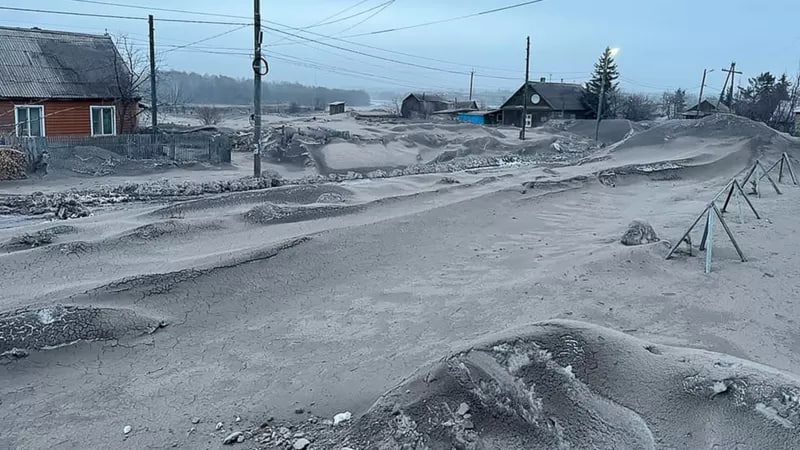
In Kamchatka, the Shiveluch volcano continues to wake up. The wind is bringing the volcanic ash to the klyuchi, Kozirevsk and Mayskoye settlements of the UST-Kamchatsky raion, with the layer of ash falling into the regions reaching up to 20 centimeters. The head of the Region, Vladimir Solodov, urged the residents of the UST-Kamchatsky raion to remain calm, recommending to be alert and stay at home.
On the night of April 11, The Awakening of the Shiveluch volcano began in Kamchatka. Volcanic ash has been sealed over the surrounding settlements.
The ash rises to a height of 20 kilometers - the highest altitude in the history of observing Shiveluch. As a result, a red regime related to aviation safety has been declared in areas close to the volcano.
"The ash cloud has spread and continues to spread about 500 kilometres northwest of Shiveluch. The ash fall on the klyuchi and Kozirevsk settlements of the UST-Kamchatsky raion is intensifying," said Alexey Ozerov, director of the Institute of Volcanology and Seismology of the Far Eastern Department of the Russian Academy of Sciences.According to him, the danger of mudflow remains in the area of the Klyuchi - UST-Kamchatsk road.Due to unfavorable weather conditions (snow and snow), it is complicated to conduct video surveillance of the Shiveluch volcano.
On April 11, ash and snow fell, leaving two settlements - the kozirevsk settlement and the village of Mayskoye-without power supply.
According to the FVV, the possibility of ash fall is not excluded in other regions, including Petropavlovsk-Kamchatsk, which is considered the center of the territory.
Shiveluch is located 440 km from the city of Petropavlovsk-Kamchatsk and is one of the largest and northernmost active volcanoes of the peninsula.
Scientists predicted the beginning of a strong eruption in Shiveluch a few months ago.
Last December, specialists of the Geophysical Service of the Russian Academy of Sciences in Kamchatka noted high activity on the volcano. Even then, small landslides begin to descend continuously from the slopes of the hill, while large landslides - once every hour-are observed. In addition, the volcano began to throw ash several thousand meters from time to time.