







- 8
- 25.08.2023 08:10:00
- 6 min read
In recent years, a number of landmark accidents have occurred in Uzbekistan, the causes of which were the same mistakes made year after year. The worst thing is that, unfortunately, our officials do not learn from them. At the same time, our neighbors in the CIS have similar problems, which periodically encounter the same accidents. So, for example, after the recent accident of the Russian automatic interplanetary station Luna-25, publications appeared in the media about the causes of this event. Interestingly, many of these problems are very similar to ours. Let's consider some of them, because there is a common Uzbek proverb - "I speak for my daughter, so that my daughter-in-law hears." Let's hope that our officials will hear something, too.
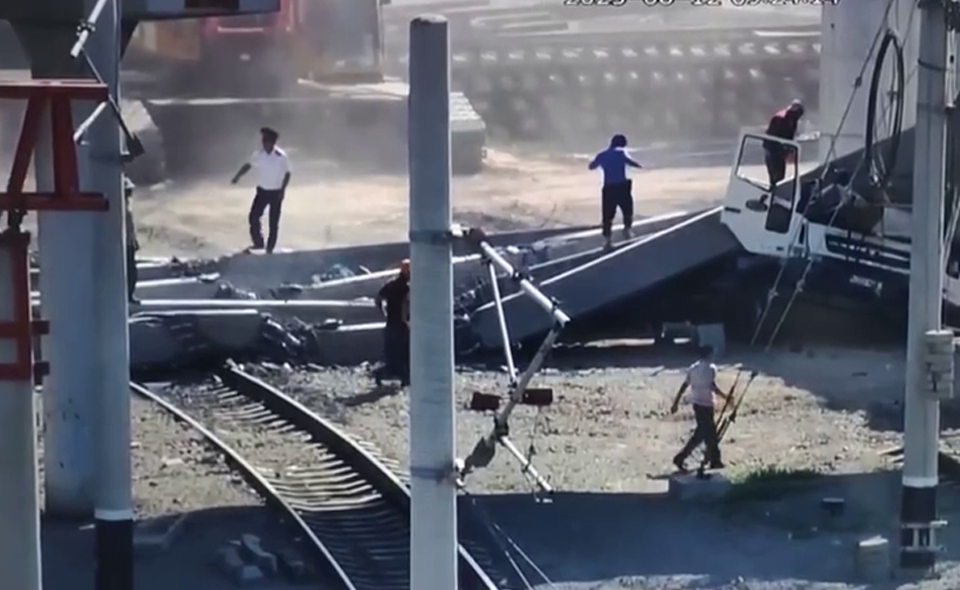
Among the main causes of all these accidents are: Brain drain due to the weak development of science, curtailment of scientific programs Poor motivation of young people to go into science and technical industries, everyone wants to become marketers and financiers Loss of experience and skills Continuity was broken, the transfer of knowledge from "veterans" to young people due to the washing out of pensioners in the 90s and zero years Corruption in the leadership of the industry - appointments based on the principle of personal loyalty, not on the basis of competence. Political priorities - launches by the holidays to prove something to someone, as a result of a rush to the detriment of quality. Hushing up the fact of the accident, so as not to upset the management, unintelligible wording in the information message about the accident. Nervousness against the backdrop of the successes of other countries. "Saw financing" without reports Destruction of popular science education of the masses, turning to religion instead The list can be continued if you wish, we are all witnesses of problems in education and saw how university professors were forced to trade at the hippodrome in the 90s. A series of reforms in education and a stagnant economy have destroyed the once powerful engineering corps, so now they are trying to solve the problem of the lack of engineers by attracting designers from Turkey and other countries. At the same time, our local catastrophes are characterized by a complete lack of information. True, on the breakthrough of the dam of the Sardoba reservoir, the authorities reported on the result of the work of the commission and the sentencing of 29 defendants, but the information was extremely scarce. After the collapse of the beams of the bridge in Tashkent, journalists had problems recording a video at the scene of the incident. However, as it turned out later, it was someone's arbitrariness, so let's hope that in the near future we will find out the true causes of the collapse of the beams.
There is no information at all about the closure of two stations on the Yunusabad line by the end of the year, and this gives rise to all sorts of rumors about what is wrong there, who is to blame, and how the authorities are going to correct this problem. It is important to note here that the lack of information is in no way compatible with the activity of the leadership to eradicate corruption. Let us return, however, to the Luna-25 station. If we discard the political and social aspect, then it is worth recognizing that accidents are a natural, albeit tragic, result of space exploration. All countries had accidents, thanks to their analysis, scientists and designers "feel" for the right path. According to the publications of experts, a soft landing on the Moon, and even in the region of the pole, is the most difficult technical task. Consider briefly the main difficulties that arise when attempting a soft landing. The moon is not a perfect ball, but a gravitational inhomogeneous body. It is strongly elongated towards the Earth, there are anomalies in the area where large meteorites fall. One can try to take this into account in the calculations, but due to the little knowledge of the zones of gravitational inhomogeneity, the calculations will be approximate. In this respect, a landing on a spherical Mars, for example, is calculated more accurately. The descent vehicle moves along the lunar orbit, having a horizontal speed, but it must be landed vertically, it is not an easy task to completely extinguish the horizontal speed, and if it is not extinguished, the device will either capsize or roll head over heels and in this case most likely collapse. Manipulations to change the trajectory are carried out according to the data of the sensors by commands from the Earth, with a delay. Jet engines that are used for maneuvering are difficult to control - doubling the fuel supply will not lead to doubling the thrust, this dependence is non-linear and sometimes unpredictable, which makes the control of maneuvers a difficult task. The complete absence of the atmosphere excludes parachute braking, which would allow maneuvering and choosing the optimal landing site. The choice of the pole for landing worsens the situation. One could choose the so-called lunar seas with a flat surface, but one of the goals of the flight was to test the hypothesis of the presence of ice, and it could only be preserved at the pole. The analysis of ice could advance humanity in unraveling the mysteries of the origin of the universe. The presence of water would make it possible not to carry it from Earth, and the decomposition of water into hydrogen and oxygen would provide people with breathing and engines with fuel. But the fact is that there are no even seas at the poles, there are high mountains, craters and abysses. This makes landing a difficult task. Despite the difficulties listed in the second part of the article, the Indian satellite landed softly on the moon. This is a success, and it is encouraging - let's hope that the lunar programs of all countries will continue and show us new discoveries in science and technology. The success of India also speaks of overcoming the negative phenomena listed in the first part of the article. And this is a good lesson for many countries, including us.