







- 7
- 24.05.2023 17:04:00
- 2 min read
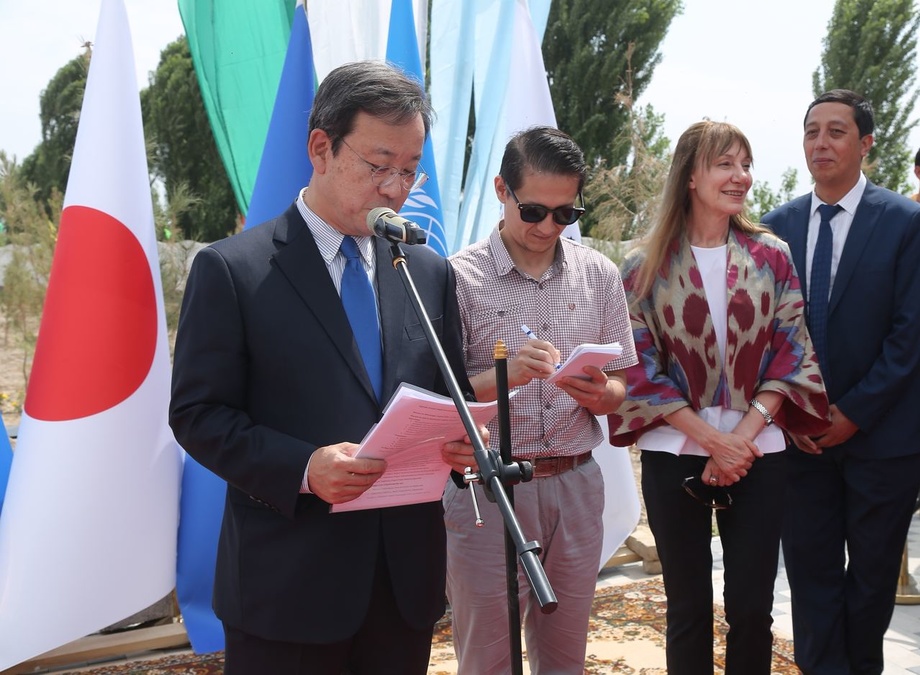
On May 23, the opening ceremony of the Climate Situation Center was held in Torakorgan district of Namangan region. It was attended by Takashi Hatori, Japan's Ambassador Extraordinary and Plenipotentiary to Uzbekistan, Matilda Dimovska, permanent representative of the United Nations Development Program in Uzbekistan, Sherzod Habibullayev, director of the Uzgidrometerology agency, and Botir Nuriddinov, deputy governor of the region.
The Climate Situation Center is a facility equipped with communication tools and designed to provide information interactively.
The project "Improving adaptation of fruit and vegetable growers to climate change in the Ferghana Valley" was financed by the Japanese government, with a total budget of about 955,000 dollars. The United Nations Development Program and the Uzgidrometerology Agency are participating as partners.
As part of the project, 20 small agrometeorological stations have been installed in the Fergana Valley so far. The meteorological station allows collecting, monitoring, processing and distribution of agrometeorological data in real time. This is very important for those who work in the field of agriculture. The reason is that crops have been damaged due to bad weather in recent years.
According to "Uzgidrometerology", natural disasters affect the lives of 1.4 million people in Uzbekistan every year. The amount of damage is about 3 billion dollars per year.
By installing meteorological locators, it is planned to ensure weather-related sectors of the economy and the safety of the population.
Farmers who have access to agrometeo data can plan agrotechnical work based on climate change, reduce costs and increase product quality.
The meteorological locator informs about expected weather events within a radius of 200 km. The data is updated every 5 minutes and is regularly transferred to the information-analytical geoportal of "Uzgidromet".
In the future, it is planned to create a network of terrestrial meteorological radars that will fully cover the territory of the republic by combining such meteorological radars into a single platform.