







- 3
- 10.05.2023 18:06:00
- 3 min read
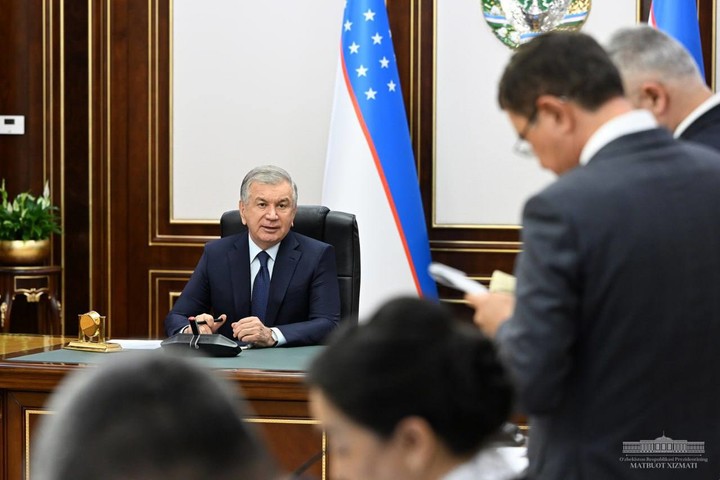
On May 10, President Shavkat Mirziyoyev presented the measures to reduce poverty and increase employment. Within the framework of administrative reforms, a ministry responsible for these areas was established, and all legal and organizational foundations were created. For the first time in our country, the value of minimum consumption expenses was introduced. In order to ensure the employment of the population, 15 trillion soums of preferential loans and subsidies were allocated to family businesses, and 200,000 hectares of land were allocated for farming. During this period, about 300,000 business entities were established, and the activities of 20,000 enterprises were expanded. Last year, 1 million people were lifted out of poverty. In our recently adopted Constitution, the state has undertaken to reduce poverty. Therefore, at the meeting, measures to bring the work to a new level were discussed. First of all, it was noted that the Ministry of Poverty Alleviation and Employment should work in the regions in a new way. The issue of supporting competent entrepreneurs and encouraging them to create new jobs was considered. For this purpose, a contract on the training of qualified workers will be concluded with them. That is, many "practical monocenters" are established in enterprises. The state allocates the necessary funds for this and provides relief on infrastructure, credit, tax and other issues. The entrepreneur provides the poor population with profitable work. Officials were instructed to implement this system in all districts and cities. It is known that China's experience in reducing poverty is noteworthy. To study this and develop new approaches, the delegation of our country recently returned to China. Experts from there were involved in the Ministry of Poverty Reduction and Employment. Now, based on the experience of China, it has been decided to implement a separate program for lifting one district out of poverty in each region. In this regard, attention will be paid to the improvement of road transport, electricity, communication and tourism infrastructure, development of small and medium-sized cities, and industrialization of neighborhoods in districts with high poverty. The Deputy Prime Minister was assigned the task of solving the issue of necessary infrastructure for this. This year, 13 trillion soums of loans and 1.5 trillion soums of subsidies are allocated to family businesses. There are also 37 types of subsidies to reduce poverty and ensure employment. But the conditions for their separation are almost the same for everyone, regardless of the socio-economic status of the families and the project's payback period. Therefore, it was proposed to provide loans and subsidies to each poor family based on a separate approach. Tasks were given to reduce poverty and turn the Ministry of Employment into a pro-people system, to establish more than 100 social services directly in the neighborhood itself.