








- 2
- 18.09.2025 16:27:00
- 4 min read
12 Billion Soums in Damages: Why We Must Be Uncompromising Against Environmental Crimes
In recent months, hundreds of violations against natural resources have been uncovered during raids conducted by relevant authorities in Uzbekistan. Just between September 13–16, illegal actions by offenders caused over 12 billion soums in environmental damage.
Why is illegal use of nature harmful? Why must the state combat it? Why should society condemn it? Let’s reflect on these questions.
Uzbekistan’s Red Book: Over 300 Species on the Brink of Extinction
Uzbekistan’s nature is one of Central Asia’s richest and most unique ecosystems. Mountains, deserts, rivers, and lakes host thousands of plant and animal species—over 15,000 animal species have been recorded, many of which are endemic.
This biodiversity is invaluable. That’s why nearly 30 nature reserves and national parks have been established to protect it. Yet, this wealth remains under threat. Today, over 300 species are listed in Uzbekistan’s Red Book as endangered. Losing one species disrupts the entire ecosystem, as every creature is a vital link in nature’s chain.
Neglecting this wealth is neglecting our future. Protecting nature is essential for national security, a healthy environment, and the well-being of future generations.
What Do the Laws Say?
According to Article 68 of Uzbekistan’s Constitution, land, underground resources, water, flora, and fauna are national wealth. Their use must be rational and is protected by the state.
Similarly, Article 4 of the Law “On the Protection and Use of Wildlife” states that wildlife is state property, and illegal use is punishable.
Thus, anyone who violates these laws isn’t just a petty offender—they’re acting against our shared national interests.
What Raids Revealed
In September, 57 cases of illegal use of natural resources were identified: sand mining, tree cutting, illegal hunting, unlicensed weapons, and waste burning.
These caused over 12.3 billion soums in damage. But the problem goes beyond money—such actions have long-term consequences like degraded land, extinct fish species, and deforestation.
Heartbreaking Examples
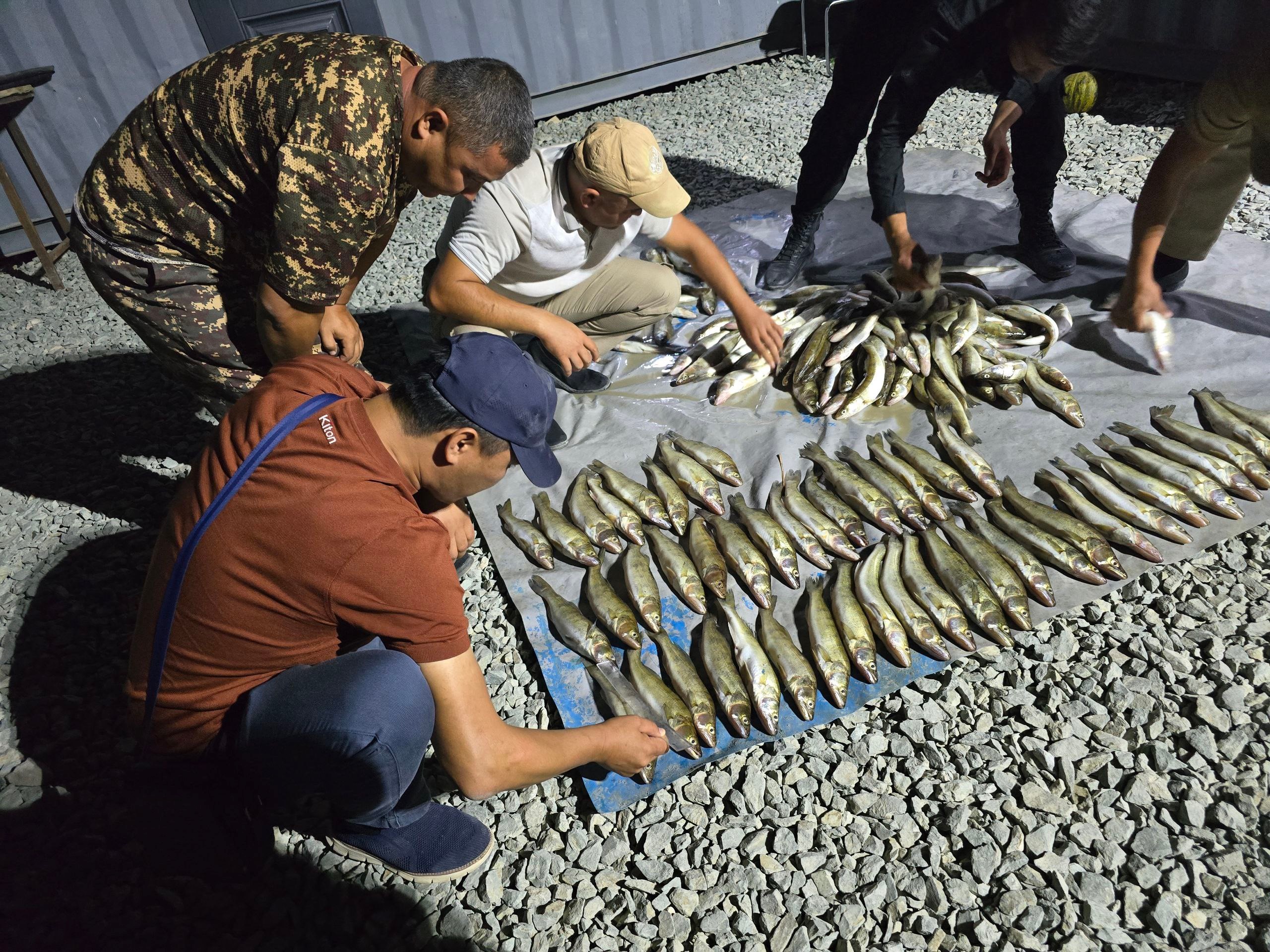
In Sirdarya, poachers using electric fishing gear killed a Red Book-listed Turkestan barbel—worth 700 million soums, though its true value is immeasurable.
Electric fishing threatens all aquatic life, killing countless small fish. In Navoi, the company “Jom Marble” illegally mined granite outside its licensed area, causing 11 billion soums in damage—money that could build schools or kindergartens.
In Fergana, a citizen illegally cut down six trees—trees that could have provided clean air for hundreds of children over 60 years.
Justice Is Inevitable
Offenders faced not only administrative penalties but also court trials. Sirdarya poachers were charged under Article 202 of the Criminal Code. Navoi’s company faced charges under Articles 197 and 229. Offenders in Jizzakh and Fergana were fined heavily.
These cases show that environmental crimes do not go unpunished.
Society’s Role
Some try to justify offenders: “He mined sand out of desperation,” “He hunted to feed his child.” But their actions threaten all of society. Cutting one tree is choking hundreds of people. Catching one fish disrupts the entire aquatic balance.
There are legal ways to earn a living. We no longer live in primitive times. These “nature destroyers” have made a profession out of it—they know the consequences but are blinded by profit. Society must recognize and reject them as true criminals.
Developed Countries Don’t Excuse Nature Destroyers
In Germany, every citizen is responsible for protecting nature. Violations can lead to fines or imprisonment. In the U.S., illegal hunting in national parks leads to heavy fines and criminal charges. In Canada, unlicensed hunting is considered an attack on state property.
These examples show that nature protection is a duty of both the state and every citizen worldwide.
Conclusion
Every act against nature is a betrayal of the future. The state must uphold the law, and society must see offenders not as victims but as threats to our shared future.
Nature is not just our present—it’s the most precious legacy we leave to our children. Just as we build homes and invest in their education and health, we must also protect the environment they will live in.
Mashhura Ochilova, journalist