






- 20
- 09.10.2025 13:53:00
- 7 min read
I am writing this material not out of a desire to argue or justify myself, but because I am sincerely saddened by the state of relations between Uzbekistan and Russia.
Over the past few years, our countries have come a long way — from mutual misunderstandings to genuine partnership built on trust, respect, and shared interests. Since 2016, after the new stage in Uzbekistan’s development began, a completely different era of bilateral relations has emerged: open borders, joint projects, and human rapprochement.
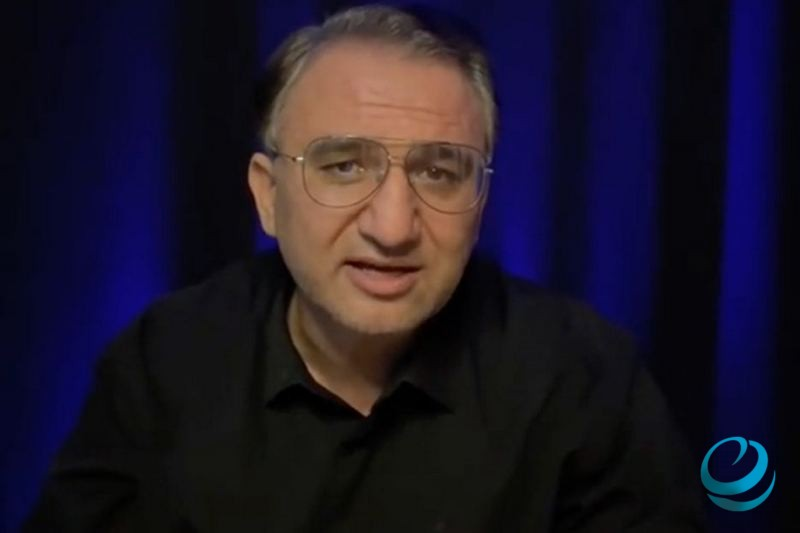
That is why it is especially painful to see this trust being undermined by people who seek to build their personal rating through provocations. In Russian media and public platforms, I increasingly notice disinformation that distorts reality and creates false narratives of “Russophobia,” “drifting away from Russia,” and “rewriting history.” These messages do not appear by themselves; they are fueled by certain commentators — including bloggers such as Aziz Hakimov.
Every such post in the media is not just a statement. It is a brick in the wall of mistrust, which diplomats, experts, and ordinary people striving for peace and cooperation later have to dismantle.
That is why I decided to lay out my reflections today — to analyze the myths spread under the guise of “truth” and to show facts confirmed by life, statistics, and common sense.
How pseudo-patriotic legends are born
In the post-Soviet information space, we increasingly see figures who, under the guise of “fighting for historical truth,” engage in ideological manipulation. One of the most striking examples is blogger Aziz Hakimov — a man who tried to build his personal popularity by distorting facts and exploiting people’s emotions related to history, homeland, and the past.
His materials were distributed as an “alternative to the official position,” but a detailed analysis shows they are carefully constructed myths designed to provoke emotions, not convey facts. Let’s analyze these myths in detail.
Myth 1. “Hakimov is a defender of historical truth.”
In his publications, Hakimov shared photographs allegedly depicting heroism during World War II. However, expert examination revealed that these images date back to 2022, when Russian military equipment was moving toward Kyiv. Modern flags of the USSR and the Russian Federation are clearly visible in the footage.
Such substitution is not accidental — it is a deliberate tactic. By using the symbols of Victory, Hakimov tries to legitimize events that have nothing to do with that war.
Historical memory cannot serve as a justification for new conflicts. Such actions do not protect history — they desecrate it, turning it into a political tool.
Myth 2. “Russophobia thrives in Uzbekistan.”
Another persistent thesis of Hakimov is the alleged discrimination against Russian-speaking citizens in Uzbekistan. Facts prove the opposite.
The Russian diaspora in the republic is one of the most active. The Russian House (Rossotrudnichestvo) in Tashkent alone holds 2–3 events weekly — lectures, seminars, cultural events, and concerts. Across the country, around 90 Russian language teachers work on a permanent basis, sent from Russia.
The Russian language remains the language of interethnic communication, and humanitarian ties between the two countries are strong and friendly.
Thus, the “Russophobia” narrative is not analysis but a political tool designed to provoke resentment and distrust between peoples.
Myth 3. “Uzbekistan is distancing itself from Russia.”
This narrative is particularly promoted by pro-Russian Telegram channels, labeling Tashkent’s policy as “multi-vector betrayal.” Reality is different.
Under sanctions pressure on Russia, Uzbekistan remains one of the few countries consistently developing cooperation with Moscow. At the same time, the republic builds equal relations with other partners — a natural approach for any sovereign state.
This policy is not a rejection of Moscow but a modern model of resilience, based on balancing interests rather than dependence. Uzbekistan is not closing itself from the world; it is strengthening its position while maintaining strategic dialogue with Russia.
Those who call this a “drift toward the West” are, in fact, opposing the very idea of equal partnership.
Myth 4. “Without the USSR, Uzbekistan had no statehood.”
This is one of the most offensive claims. Hakimov asserts that Uzbekistan “gained statehood only after joining the USSR.” Facts say otherwise.
Since gaining independence, the republic has overcome the severe legacy of the 1990s crisis, increasing its GDP from $13.8 billion in 1991 to a projected $130 billion in 2025.
These figures are not just economics — they are proof of the nation’s institutional maturity and strength.
By nullifying the achievements of independence, Hakimov effectively undermines the efforts of millions of people who built modern Uzbekistan.
The history of the USSR is a part of shared memory — but not its entirety. The country’s independence is the result of a natural historical process, not a “gift from Moscow.”
Myth 5. “Hakimov was arrested for criticizing the authorities.”
Another misconception actively spread by his supporters.
Hakimov’s arrest has nothing to do with journalists Nikita Makarenko or Sherzodkhon Kudrathuja, as some pro-Russian media claim. His criminal prosecution was initiated based on evidence of incitement to hatred and war propaganda.
If it were merely about slander or insulting individuals, the case would have been closed or resolved through reconciliation.
Therefore, this is not about “censorship,” but a legal response to actions that threaten public safety. Law enforcement prevented possible escalation — from online provocations to real-world conflicts.
Myth 6. “Hakimov fights for the truth about repressions.”
The blogger repeatedly insulted rulings of the Supreme Court of Uzbekistan honoring victims of Stalinist repressions, calling national heroes “traitors.”
However, each of these rulings was based on archival research and expert review. Moreover, similar discussions are ongoing in Russia itself — museums have been created, books published, and memorials to repression victims established.
Thus, Uzbekistan’s stance is not anti-Russian — it reflects a humanistic approach to preserving historical memory.
By using insults and profanity, Hakimov does not “open people’s eyes” — he deliberately provokes public hostility.
Myth 7. “Money from Russian migrants feeds Uzbekistan.”
This cliché is used to paint Uzbekistan as “economically dependent.” However, labor migration is a normal market process. Russia needs a workforce; Uzbekistan needs employment opportunities for its citizens.
Even within Russia, there is debate between economic and security circles — the former view migration as a resource, the latter as a threat. Meanwhile, the crime rate among Uzbek migrants is significantly lower than among native Russians.
Thus, migration flows represent mutual interest, not one-sided charity.
Uzbekistan’s economy today is diversified and no longer dependent on remittances.
Conclusion: Between Facts and Manipulation
Aziz Hakimov is not a fighter for truth but a person who built his media presence on fabricating conflicts.
He does not debunk myths — he creates them: about “Russophobia,” “decline of independence,” “censorship,” and “glorification of enemies.” His rhetoric is not aimed at defending Russia but at undermining trust between two nations.
The real facts show the opposite — Uzbekistan and Russia continue cooperation, expanding cultural, humanitarian, and economic ties, and jointly upholding the principles of mutual respect.
Today, the dividing line runs not between countries, but between truth and manipulation.
History, respect, and rational dialogue — these are the true instruments of partnership.
Myths, on the other hand, are always the weapon of those who fear reality.
Anton Moshkin, Political Analyst
"Author's opinion may not reflect the views of the editorial team"