







- 8
- 11.08.2023 09:18:00
- 4 min read
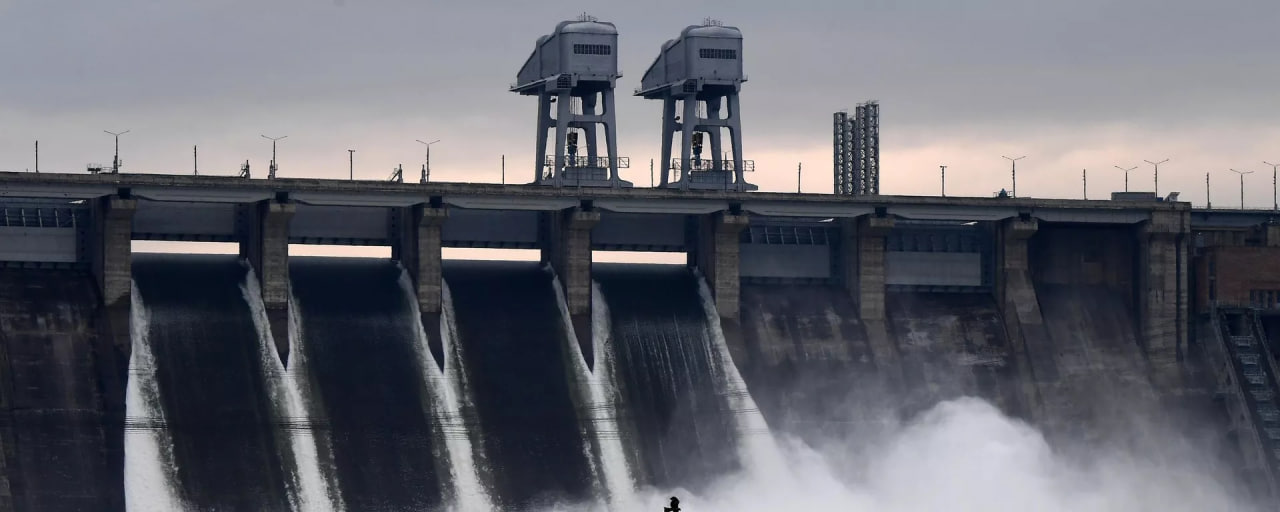
The volume of the Kirov reservoir in Kyrgyzstan has decreased by 6 times compared to 2022. Kazakhstan does not actually receive water via the Talas River from Kyrgyzstan. The Ministry of Ecology and Natural Resources reported on the critical situation with water supply in Zhambyl region.
The ministry stressed that the shortage of irrigation water is felt by the Bayzak, Talas and partially Zhambyl districts, in fact, due to the shortage of water from the Kirov reservoir, about 4 thousand hectares of onions and sugar beet are under threat.
The Talas district is completely disconnected from irrigation.
As of August 9, the volume of the Kirov reservoir amounted to 32.48 million cubic meters. This is 144.8 million cubic meters less than it was in the same period last year (177.28 million cubic meters).
Kazakhstan's demand for the Talas River in August is 45 cubic meters per second, but water is not actually supplied from the Kyrgyz side, the ministry stressed.
"Negotiations are currently underway on the supply of water from the reservoir at a flow rate of at least 5 cubic meters per second to maintain the operation of the Zhambyl GRES named after T.I. Baturov, as well as ecological release in the Talas riverbed," the report says.
In order for more water to flow into the Talas River, the Kazvodkhoz branch is cleaning collector and drainage networks directly along the state border, the Ministry of Ecology stressed. This will increase the flow of water in the Talas River from 5 to 8 cubic meters per second and minimize crop losses using the water circulation method.
According to the Ministry of Ecology, today the volume of water at the Talas hydroelectric plant, taking into account the recharge of collector waters, is 7.26 cubic meters per second. Water in proportional proportions and by the method of water circulation is distributed to Zhambyl and Baizak districts.
The situation in the Shu River basin
"Through the Shu River basin, water is supplied to the Kordai district through the Georgievsky Trunk, Kolos, Shortobe, United channels and for the Western Bolshoy Chui Canal of the Merken district," the Ministry of Ecology reported.
This year, the main problem with water supply has developed along the Georgievsky trunk canal of the Kordai district, where 28 thousand hectares of irrigated land are suspended.
The demand of the channel in August is 14 cubic meters per second. But according to the schedule of June 26, half as much is actually served - 7-6 cubic meters per second, with fluctuations in the direction of decrease. On August 9, the flow rate was 6.7 cubic meters per second, and with such a flow rate, it is almost impossible to regulate water distribution on 60 kilometers of the channel, the Ministry of Ecology said.
Due to an acute shortage of water, the rural districts of Sarybulak, Betkainar, Kakpatas and Stepnoye of the Kordai district are disconnected from irrigation. This is about 5 thousand hectares of land.
"Water from Kyrgyzstan has not been supplied through the Western Bolshoy Chui Canal of the Merken district for the past 4-5 years," the ministry stated.
It feeds about 10 thousand hectares of irrigated land.
"To get out of this situation, the branch supplies the Western Bolshoy Chui Canal from internal sources – the Aspara and Merkenka rivers," the Ministry of Ecology explained.
Taking into account the critical situation of water supply and in order to avoid social tension, an interdepartmental commission was established on behalf of the Prime Minister of Kazakhstan, which from July 18 to 20 made a visual inspection of the acreage of the Kordai, Baizak and Talas districts.
"The visual inspection confirmed the unfavorable situation in the fields due to the lack of irrigation water from Kyrgyzstan," the ministry noted.
The Ministry of Ecology added that proposals will be made to allocate compensation to agricultural producers who have suffered damage from the failure to supply irrigation water from cross-border sources.
"Every year the shortage of water resources is becoming more noticeable, and every year we raise this problem, proposing to reduce the sowing of moisture–loving crops, switch to moisture-saving technologies, compliance with crop rotations, irrigation regimes and other reclamation measures," said Vice Minister of Ecology Galidulla Azidullin during a meeting with representatives of Zhambyl region.
It is reported that a full inventory of irrigated lands will be carried out. Now, within the framework of the pilot project, the Zhambyl branch of RSE "Kazvodkhoz" together with "Kazakhstan Garysh Sapary" determines an accurate map of irrigated lands in order to calculate the required volume of water supply in the next growing season.