







- 21
- 02.05.2023 07:57:00
- 9 min read
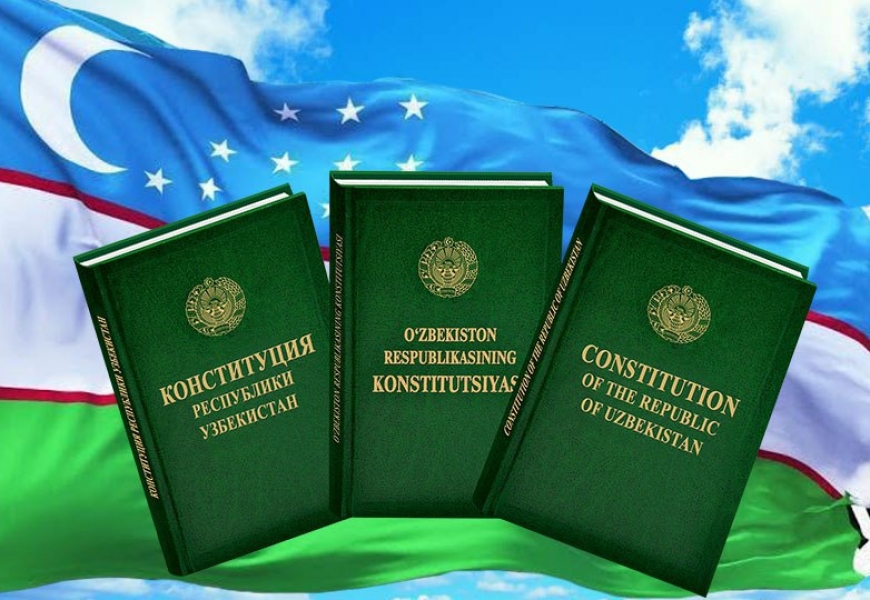
The head of Uzbekistan, which has been updated by 65 percent and has become much more “full”, entered into force from May 1. Kun.uz lists the most important of the changes.
The new revision of the Constitution of the Republic of Uzbekistan entered into force on May 1, 2023. The basis for this was the adoption of the corresponding law of 11 articles according to the result of the referendum on April 30. Article 1 of this law is accompanied by a new revision of the Constitution.
Prior to this, there had been a total of 15 amendments to the Constitution since 1992. This time, a new revision of the document was adopted, which caused the magnitude of the changes. As a result of the renovation, the number of substances in the head chamber increased from 128 to 155, and the norms in it increased from 275 to 434. In general, according to officials, the Constitution was updated by 65 percent.
Below Kun.uz the changes that have occurred in the top ten most important directions in the eyes are induced by the sequence in the document.
1. Uzbekistan-legal, social and secular state
The sentence” Uzbekistan – sovereign democratic republic " in Article 1 of the Constitution is being amended as follows:
Uzbekistan is a sovereign, democratic, legal, social and secular state with a republican form of government.
The republican form of government means that the Supreme bodies of state power are elected by the people for a certain period of time.
A sovereign state means having full independent rule and absolute jurisdiction over its territory.
Democracy, on the other hand, provides for equal participation of all by representing the people's power and being elected in public administration and electing their representatives.
In a legal state, all processes are built on legal grounds, civil servants are required to think within the framework of law, to look at all issues with a legal eye. Moreover, in a legal state, all citizens are equal before the law, the higher bodies of state power are also subject to the law and ensure the inevitable implementation of the laws.
As soon as Uzbekistan declares itself a social state, it is obliged to create conditions for each of its citizens to live a decent life. This means the distribution of available resources on the principles of social justice, the avoidance of a strong stratification in society, the guarantee of quality education and medicine even for the most vulnerable strata, the functioning of effective social protection programs, the support of citizens with limited opportunities and need for application, Fair Labor legislation and an attractive pension system. More simply, even children of the poorest family should have the opportunity to grow up healthy and get a good education and achieve well-being.
In a secular state, the state and religion will be separated from each other. The state treats all the same regardless of religious belief, taking a neutral position on issues concerning religion.
Section 154 of the new constitution stipulated that the provisions of Section 1 could not be revised. Likewise, a clause in Section 154 concerning the same provision cannot be revised.
In other words, this norm implies that Uzbekistan will never renounce democracy, commit to legal statehood, become a monarchy or an Islamic Republic.
2. The Constitution is in direct effect
Article 15 added the following addition:
The Constitution of the Republic of Uzbekistan has supreme legal force, directly applies and forms the basis of a single legal space in the entire territory of the country.
The direct operation of the Constitution allows citizens to act, in particular, to appeal to the court, based not only on laws, but also directly on the norms of the Constitution.
Under the law passed in the referendum, the Supreme Court must accept the decision of the relevant plenary within 3 months. On the basis of this decision, a unified judicial practice is introduced by the courts on the application of the norms of the Constitution as a document directly acting.
3. Benefits do not need to be written down in law
Article 19 of the new Constitution (previously Article 18) is about the equality of citizens before the law, regardless of gender, nationality, position, etc. Part 2 of this article is changing as follows:
Old: privileges are established only by law and must comply with the principles of social justice.
New: benefits are established only in accordance with the law and must comply with the principles of social justice.
With this, one of the norms of the Constitution, which has practically ceased to work, is being adapted to real reality. Practice is such that privileges and preferences on various fronts are issued not only on the basis of laws, but in many cases on the basis of legislative documents – decisions and decrees.
4. All inaccuracies-in favor of man
According to the new revision of the Constitution:
All conflicts and uncertainties in legislation that arise in the interaction of a person with state bodies are interpreted in favor of a person.
Social relations have endless forms, it is practically impossible to fully codify them in regulatory legal acts.
Now, if there is a conflict in matters that are not clearly defined in the legislation, the issue will be resolved in favor of a person.
In addition, the situation must be resolved in favor of the citizen even in the event of an error by state bodies in the Proceedings of various documents, for example, in the case of a pension appointment, when the relevant documents are not found in the base and there is uncertainty.
5. Human rights may be restricted for the purpose of social ethics and public order
The question of the limitation of rights and Freedoms was regulated by the following two norms in the previous constitution:
The rights and freedoms of a person, enshrined in the Constitution and laws, are inviolable, and no one has the right to deprive or limit them without a court decision.
Citizens are obliged not to undermine the legitimate interests, rights and freedoms of other persons, State and society in the exercise of their rights and freedoms.
In the new revision of the Constitution, the above two norms were preserved almost unchanged. At the same time, a new norm was added as follows:
The rights and freedoms of a person can be limited only in accordance with the law and only in the framework necessary for the purpose of protecting the constitutional order, the health of the population, social morality, the rights and freedoms of other persons, ensuring public safety and public order.
In terms of restrictions, these norms also apply to the right to freedom of expression. That is, the right to seek, receive and disseminate information can only be limited in order to protect the constitutional order, the health of the population, social morality, the rights and freedoms of other persons, to ensure public safety and order, to prevent the disclosure of state secrets or other secret guarded by law.
It should be noted that the concept of “Social Ethics” has not yet been included in the legislation of Uzbekistan. There is also a need for a legal review of the competent authority on the limitation of human rights under this article “in order to ensure public order”.
6. Teachers in special recognition
A new article on teachers was added to the Constitution. It consists of two clauses:
In the Republic of Uzbekistan, the work of the teacher is recognized as the basis for the development of society and the state, the formation and upbringing of a healthy, harmonious generation, the preservation of the spiritual and cultural potential of the people and the enrichment.
The state takes care of the protection of the honor and dignity of teachers, their social and material well-being, their professional growth.
Thus, the bishops became the only professional holders who did not represent the field of law, but were specifically mentioned in the supreme law. Of the teachers named in the Constitution, all those in other professions are representatives of the field of law (judges, prosecutors and lawyers). In other cases, there was talk of areas, not professions (for example, media, various public associations).
7. The land may be privately owned
Privatization of non-agricultural land plots has begun in Uzbekistan since 2022. At about the same time, the primary version of the draft new Constitution, published the previous year, pointed out that it was impossible to privatize land intended for agriculture. From the final interpretation, such a restriction was removed, and the norm on the privatization of land was formulated as follows:
The land can be privately owned under and in accordance with the conditions provided by law and providing for its rational use and its protection as a nationwide wealth.
In the first draft of the general qomus published last year, it was proposed to include the following sentence: “in economic activity, dishonest competition, monopolization is not allowed.” In the end, the norms on this matter looked like this::
The state creates conditions for the development of market relations and honest competition.
Monopolistic activities are regulated and restricted by law.
Also, the norm contained in the primary draft of the document: “the results of privatization will not be revised or canceled” was ultimately not included in the Constitution.
8. Obstructing media activity causes liability
The previous constitution's chapter, "media", consisted of a single article. It said: "the media are free and work according to the law. They are responsible for the accuracy of information in the prescribed manner. Censorship is not allowed"”
Under the new constitution, this chapter consisted of two articles: