








- 5
- 06.07.2023 15:58:00
- 2 min read
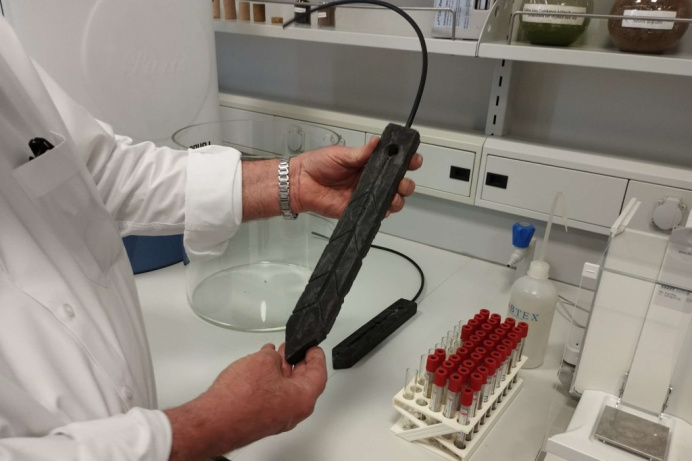
Scientists Meretmuhammet Khudaiberdiev and Nasiba Charykulyeva of the Center for Technology of the Academy of Sciences of Turkmenistan have developed an innovative drip irrigation system injector that simultaneously saves water, stops the development of fungi, and creates conditions for the development of the necessary microbes for plant nutrition.
In addition, the production of such injectors will help to dispose of many industrial wastes, because the mechanism itself is made of lump sulfur, activated carbon, metal shavings, river sand and oil-fat saopstock - waste products of the Turkmen industry. The injector was demonstrated by scientists during a conversation with an ORIENT correspondent.
The elements contained in the injector are dissolved in a stream of water, thereby providing plant roots with various microelements. The problem of rotting is also eliminated due to the fact that water does not come into contact with plant stems.
The injector is a tube with tubules that deliver water to various parts of the plant root. He himself is buried deep to the very foundation and is connected to the general water supply system.
Another know-how for the agricultural sector of the country is the technology of rational use of natural resources by combining alternative energy sources. First of all, we are talking about "eco-granules" created with the help of calcined algae, microelements of thermal mineral water, slaked lime, zeolite and other additives.
Scientist Meretmuhammet Khudaiberdiev found out that the new additive contributes to the rapid restoration of saline soils, the efficient absorption of fertilizers and the spread of colonies of microbes necessary for plants. The emulsion with the additive can be sprayed on the stems of the plants.
Combining eco-additives with alluvium, that is, with a mixture that is a waste material when cleaning ponds and watercourses, helps to provide irrigated lands with an additional volume of organic fertilizer.
The technology has already been proposed for mass production.
source: orient news