







- 1
- 13.05.2026 11:36:00
- 6 min read
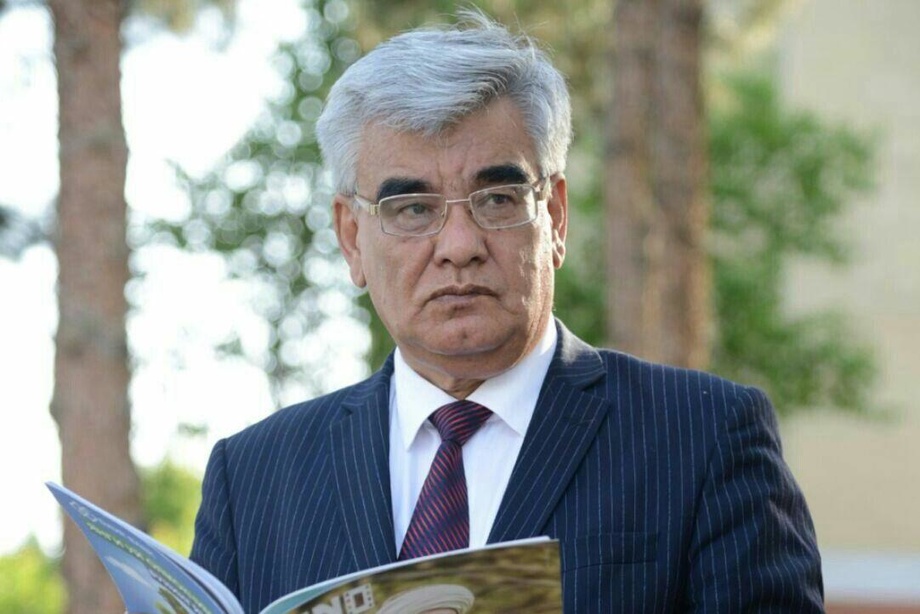
The People’s Poet of Uzbekistan, Usmon Azim, published an essay titled “Riyosiz So‘zlar” (“Sincere Words”), dedicated to the reforms taking place in the country, social transformations, and his personal memories of the period before the current wave of reforms began.
In the essay, the author reflects on the role of the intelligentsia, the responsibility of artists before society, and the perception of the changes occurring in Uzbekistan. According to Usmon Azim, writers and poets are especially sensitive to injustice, social problems, and the mood of the people. At the same time, any positive change taking place in the country is perceived by them as a shared victory.
The author notes that representatives of the creative intelligentsia have always connected the well-being of the state with the quality of life of ordinary people. The essay emphasizes that the current reforms in Uzbekistan are large-scale and affect nearly every sphere of public life.
Usmon Azim pays particular attention to the pace of change taking place in the country. In his view, the reforms are being implemented not formally, but through modern approaches, technologies, and new development mechanisms. He notes that improvements in the investment climate and the creation of favorable conditions have helped actively attract foreign investment, while modernization processes are spreading across all regions of the republic.
As an example, the author recalls a recent trip to one of the neighboring countries together with a group of representatives of the creative intelligentsia. During conversations there, participants began comparing ongoing developments and concluded that Uzbekistan had significantly advanced compared to previous stages of its development.
The author remarks that in his 76 years of life, he has never before witnessed such visible improvements in people’s living standards. In his opinion, today’s transformations are the result of extensive constructive work and consistent state policy.
A significant part of the essay is devoted to memories of the hardships faced by citizens in earlier years. Usmon Azim recalls problems with heating in residential buildings, low household incomes, delays in pension and salary payments, as well as difficulties connected with the banking system and the use of plastic cards.
The author separately describes the former problems of the currency market, the activities of illegal currency exchangers, administrative restrictions, and numerous bureaucratic barriers. According to him, many people experienced feelings of hopelessness and an inability to influence the situation.
The article also mentions cases of abuse by certain state officials, pressure on entrepreneurs, and violations of citizens’ rights. Usmon Azim notes that such issues caused disappointment and distrust among the population.
In the author’s opinion, serious changes began after President Shavkat Mirziyoyev came to power. The essay states that accumulated problems in the banking sector, the social sphere, and the functioning of state institutions gradually began to be addressed.
Usmon Azim points out that many decisions that are now considered routine once required considerable political will and consistency. In particular, he highlights the simplification of banking operations, the normalization of plastic card services, and the full restoration of pension payments.
Special attention in the essay is devoted to changes in the Surxondaryo Region and the city of Termiz. The author recalls that the region was once associated with numerous restrictions, inspections, and travel difficulties. According to him, checkpoints existed between regions, and trips were accompanied by lengthy document and baggage inspections.
The article emphasizes that many restrictions have since been lifted, while Termiz itself has undergone significant transformation in recent years. Usmon Azim notes the development of urban infrastructure, the construction of new housing, street improvements, landscaping, and the creation of modern public spaces.
The author also recalls a trip to Denov, where, according to him, he initially failed to recognize the city because of the scale of the changes. The essay describes the construction of new residential complexes, the beautification of territories, and the emergence of a modern urban environment.
A substantial portion of the publication is dedicated to regional development. Usmon Azim writes that during recent meetings and discussions, long-term socio-economic development plans for Surxondaryo Region extending into the 2030s were reviewed. According to him, every project is accompanied by concrete calculations, identified sources of financing, investors, and implementation deadlines.
The author also draws attention to the approach toward implementing social initiatives. As an example, he cites an episode in which the President asked whether a sports boarding school for young wrestlers had its own school. After receiving a negative answer, he reportedly instructed officials to build one before the start of the new academic year.
According to Usmon Azim, such attention to detail demonstrates a systematic approach to solving social issues and developing human potential.
The essay also discusses the development of transport infrastructure, including the construction of roads, bridges, new residential districts, railway lines, and airports. The author emphasizes that the scale of transformation is becoming visible in nearly every region of the country.
Another topic of the publication is the restoration of relations with Central Asian countries. Usmon Azim writes that after Shavkat Mirziyoyev came to power, Uzbekistan began actively strengthening ties with neighboring states.
The author recalls that crossing borders previously involved serious difficulties, and many relatives and friends living on opposite sides of the border were limited in their ability to communicate. After relations normalized, the situation changed significantly.
The article cites a statement by Emomali Rahmon, who, according to the author, once spoke highly of Uzbekistan’s leadership. Usmon Azim interprets this as evidence of changing international perceptions of the country.
The essay also discusses the development of cooperation with Kyrgyzstan and Kazakhstan. The author emphasizes that today Uzbekistan is perceived as one of the key states in the region, playing an important role in the development processes of Central Asia.
Economic reforms are also mentioned in the publication. Usmon Azim writes about growth in the cotton industry, industrial modernization, and the launch of major production facilities. As an example, he cites the construction of the third copper-processing plant in Olmaliq.
In addition, the author positively evaluates the creation of the Center of Islamic Civilization, calling it one of the largest cultural projects of recent years.
In the conclusion of the essay, Usmon Azim draws a parallel between the country’s development and the successes of the Uzbekistan national football team. According to him, he had long associated the team’s possible qualification for the FIFA World Cup with the country’s overall development and the improvement of living standards.
Summing up his reflections, the People’s Poet of Uzbekistan notes that the country’s future depends on constructive work, love for the homeland, respect for justice, and the consistent continuation of reforms.