New Opportunities for Investors to Be Created in New Tashkent
2
12.10.2026 15:27:00
8 min read
President Shavkat Mirziyoyev Attends Commissioning of Facilities and Launch of New Projects in New Tashkent
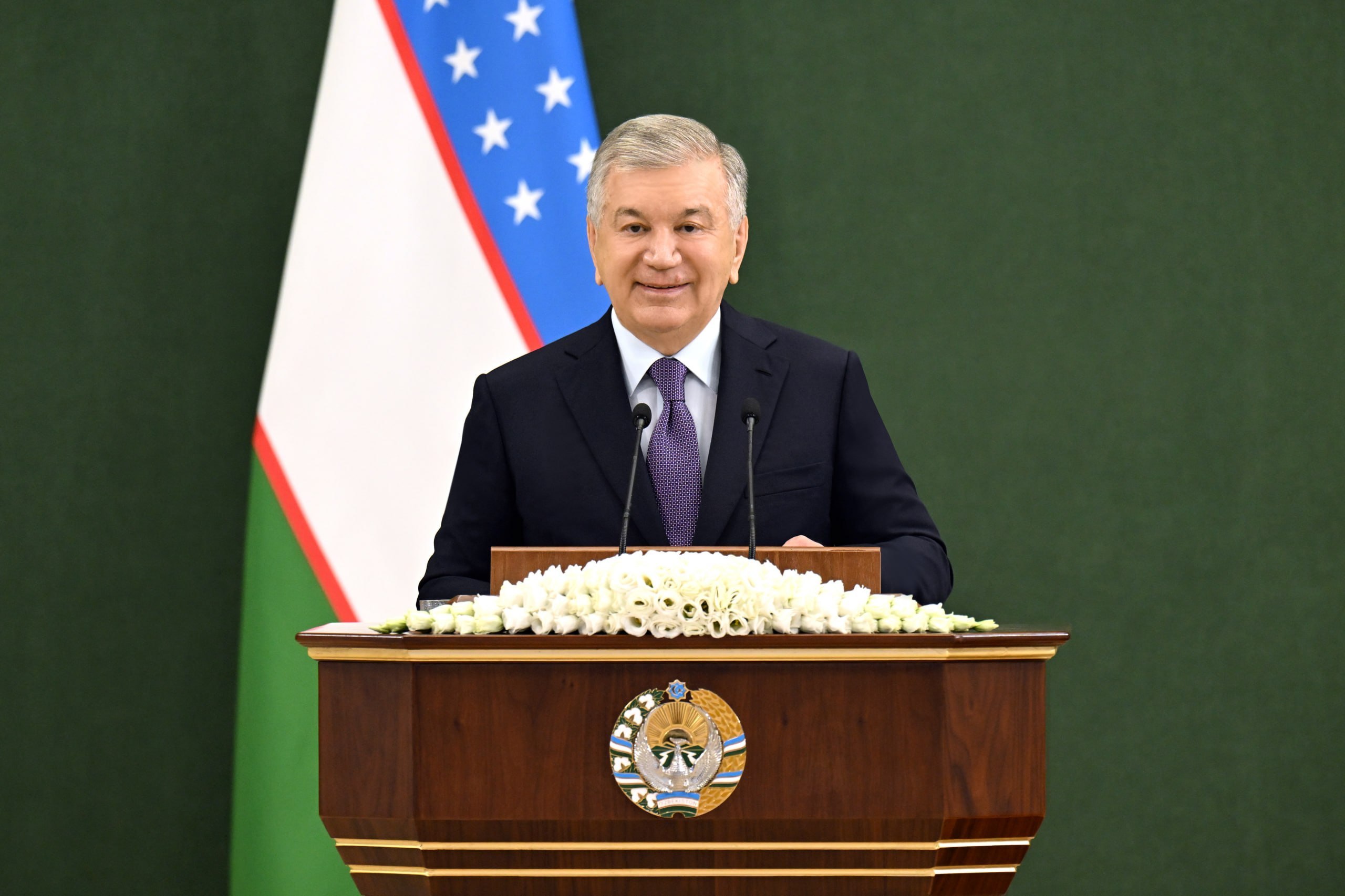
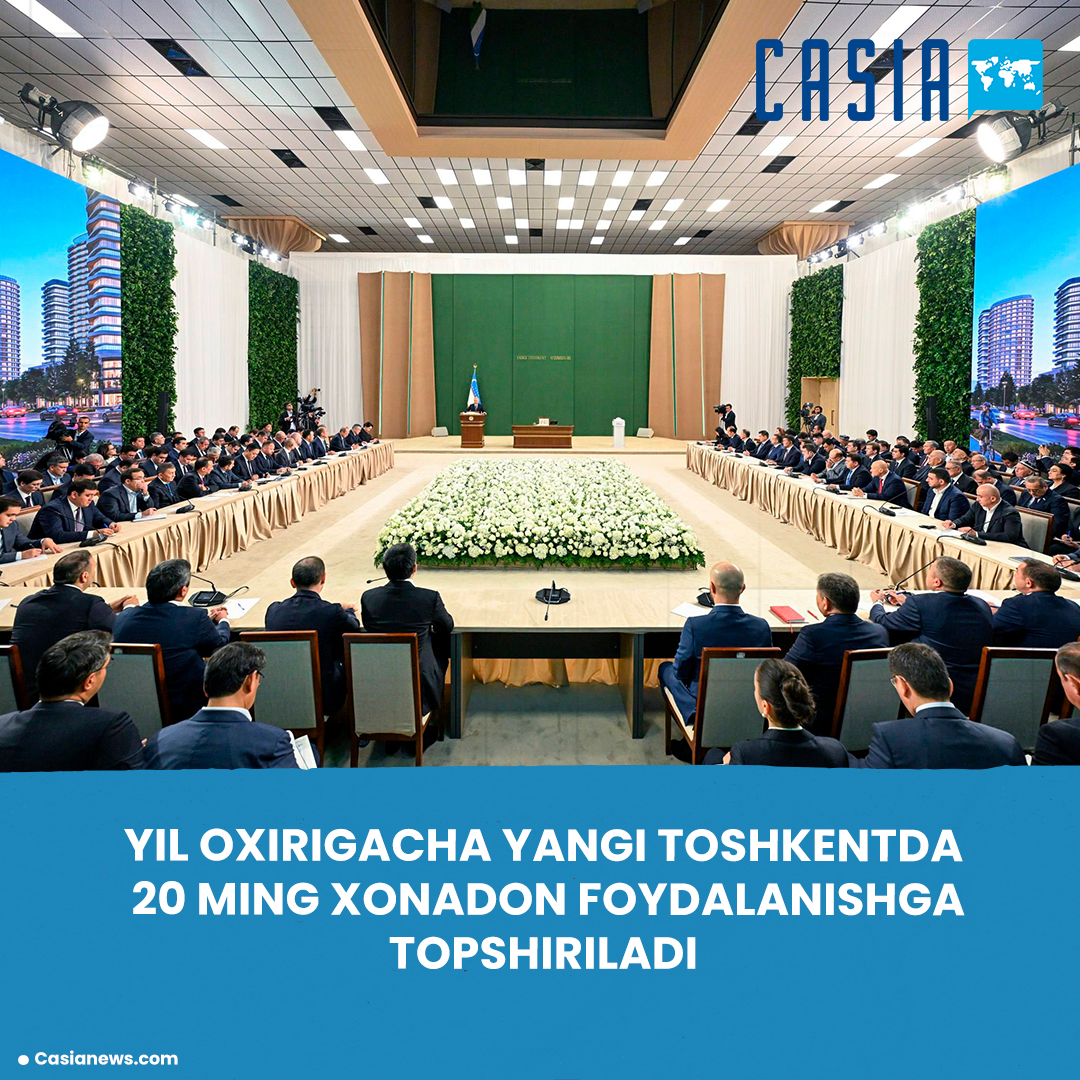
President Shavkat Mirziyoyev attended a ceremony in New Tashkent marking the commissioning of newly built facilities and the launch of construction on new projects.
Launched three years ago, New Tashkent is the largest urban development project in the country's history. Designed as a safe and green city, the area is expected to host projects worth $50 billion in its first phase alone, based on modern technological solutions.
The city will feature 2,000 hectares of green spaces and 500 hectares of parks and recreational areas. A total of 150 million square meters of residential and non-residential space will be built in accordance with green construction standards.
Over the past period, construction and development works worth $2 billion have been completed in New Tashkent. Residential buildings, universities, a library and an amphitheater have been built. At today's ceremony, seven facilities with a combined value of $1 billion were commissioned.
These include the first phase of the Sharq Bahori residential complex, road and infrastructure facilities, the New Tashkent No. 1 substation, a trigeneration plant, the Chamber of Commerce and Industry building, the Sohil Bog'i recreational park and a general education school with a capacity of 2,000 students.
Built with a $73 million investment and with the participation of Türkiye's MIMSAN company, the trigeneration plant will be able to provide centralized heating and cooling to 100,000 households while simultaneously generating electricity. The substation and high-voltage power transmission lines project, implemented in cooperation with China's Haocheng Industry Group Limited, is valued at $95 million.
In addition, 18 kilometers of roads have been constructed, along with 13 kilometers of sewerage networks and 4.5 kilometers of drinking water pipelines. Pedestrian and cycling paths have been developed along the 10-kilometer Sohil Bog'i park on the riverbank. Nearly 7,000 apartments have been built in the first phase of the Sharq Bahori residential complex.
At the ceremony, construction was launched on ten more major projects worth a total of $2.5 billion, with the participation of partners from China, Türkiye, the United Arab Emirates and other countries.
One of these projects is the Deep Tech Park industrial zone, specializing in the production of high-tech products and semiconductors. A total of $320 million will be invested in its development. In the future, the zone is expected to accommodate projects with a combined value of $1.7 billion.
A waste collection and processing project designed to generate green electricity will be implemented with the participation of Finland's MariMatic company. Plans also include installing photovoltaic systems with a total capacity of 20 megawatts on the rooftops of apartment buildings.
To connect New Tashkent with the capital, a bridge, an overpass and a 10-kilometer road will be built between Temur Malik Street and the 4R12 highway. Another planned project is an underground parking facility connected to metro stations.
The Metropolis business city, covering more than 818,000 square meters, will accommodate offices, hotels, residential buildings and service facilities. Of this area, 500,000 square meters will be allocated for business purposes. The project is expected to create employment for 1,500 people.
In addition, the Silk City, Mavj and Marjon residential complexes, as well as the 120-bed New Tashkent Central Hospital, will be built.
The President noted that these projects would help establish New Tashkent as a center for business, tourism and culture. He expressed his gratitude to the builders, engineers, designers and foreign partners involved in the city's development.
Shavkat Mirziyoyev also held an open dialogue with investors and entrepreneurs on accelerating construction in New Tashkent.
Under the New Tashkent project, launched three years ago, the state has allocated substantial funding for infrastructure and key social facilities. More than $2 billion has been invested in the new city to date. However, it was noted that the pace of private-sector participation in construction remains below the area's potential.
A total of 20,000 hectares of land has been allocated for the city. During the first phase, projects worth $50 billion are planned across 6,000 hectares. Currently, construction is underway on more than 1,000 hectares, primarily financed by the state, while 94 hectares have been allocated to entrepreneurs.
“New Tashkent is not simply an area where new housing is being built,” the President said.
The new city must become an independent economic hub that attracts business, education, healthcare, tourism and services. In this regard, it was pointed out that two-thirds of the land allocated to investors was designated for residential projects, while construction had not yet begun on 28 plots.
The President emphasized that such delays should not simply be attributed to a lack of funding or interest on the part of investors. Outdated requirements, lengthy permitting procedures and the tendency of some government agencies to act as inspectors rather than partners were identified as obstacles to project implementation. Accordingly, instructions were issued to review the entire process, from land allocation to the commissioning of completed facilities.
By the end of the year, 20,000 apartments are scheduled to be completed and commissioned in the city. This will provide a new living environment for at least 70,000 people. The President stressed that essential recreational, sports, retail, educational and healthcare services must be developed alongside housing.
A 55,000-seat stadium meeting FIFA requirements is under construction in the city. In connection with next year's FIFA U-20 World Cup, officials were instructed to assess demand for hotels, catering establishments and entertainment venues and to present entrepreneurs with specific investment proposals.
The relocation of government agencies will also play an important role in establishing a business-friendly environment in the new city. The Ministries of Construction, Transport and Energy are already operating there, while buildings are being constructed for employees of other agencies. Instructions were issued to begin relocating the remaining ministries and government organizations to New Tashkent as well.
During the dialogue, the importance of giving investors greater scope to propose initiatives in implementing the city's master plan was emphasized. Proposals to change plot sizes or the designated use of facilities for projects that serve the city's interests should be considered promptly and according to clear criteria. Officials were also tasked with increasing the number of plots for which concepts, project documentation and construction permits are prepared in advance.
To attract major commercial developments, a land allocation mechanism based on open initiatives and the Swiss Challenge principle will be introduced. Under this mechanism, an investor's proposal will be made public, and the land will be allocated to the original initiator unless another participant offers better terms.
Infrastructure fees will be revised to encourage the construction of service-sector and social facilities. The base rate will be reduced threefold for retail, service and business centers; fivefold for hotels and tourism facilities; and tenfold for cultural and entertainment venues. The fee for private kindergartens, schools and hospitals will be set at 1 percent. These arrangements will also apply to projects whose construction has already begun.
Measures were also outlined to ease the costs associated with applying green building standards in New Tashkent. The state will fully cover the costs of obtaining green certification for non-residential projects valued at more than $50 million. The requirement for investors to landscape 30 percent of each plot they purchase will not apply here, as the state will ensure that 30 percent of the city's territory is allocated to green spaces in accordance with the master plan.
An official will be assigned to every project worth more than $50 million to assist the investor throughout implementation until the facility is commissioned. Separate investment agreements will be concluded for such projects, setting out the parties' obligations and terms tailored to the specific characteristics of each project.
To ensure that entrepreneurs throughout the country can benefit from these opportunities, each district of the capital and each of the other 13 regions of Uzbekistan will be allocated at least 100 hectares in New Tashkent. Entrepreneurs from the respective areas will have priority in the initial auctions for these plots.
For foreign investors, the first 50 plots have been identified. Proposal packages detailing their locations, economic calculations and available opportunities will be distributed through diplomatic missions. Ministers were also instructed to present New Tashkent projects during meetings with major foreign companies.
The development of the Shirin district in Samarkand was also reviewed. Progress there was criticized as too slow, and it was decided that the incentives and opportunities introduced for New Tashkent would also be extended to this district.
Commenting on the distinction between domestic and foreign investors, the President stated: “Capital, progressive ideas and honest work have no nationality!” He emphasized that every entrepreneur participating in the development of New Tashkent and the Shirin district was contributing to the country's progress.
Following the discussion, the President met with investors and listened to their proposals and initiatives.