







- 0
- 29.10.2026 12:35:00
- 1 min read
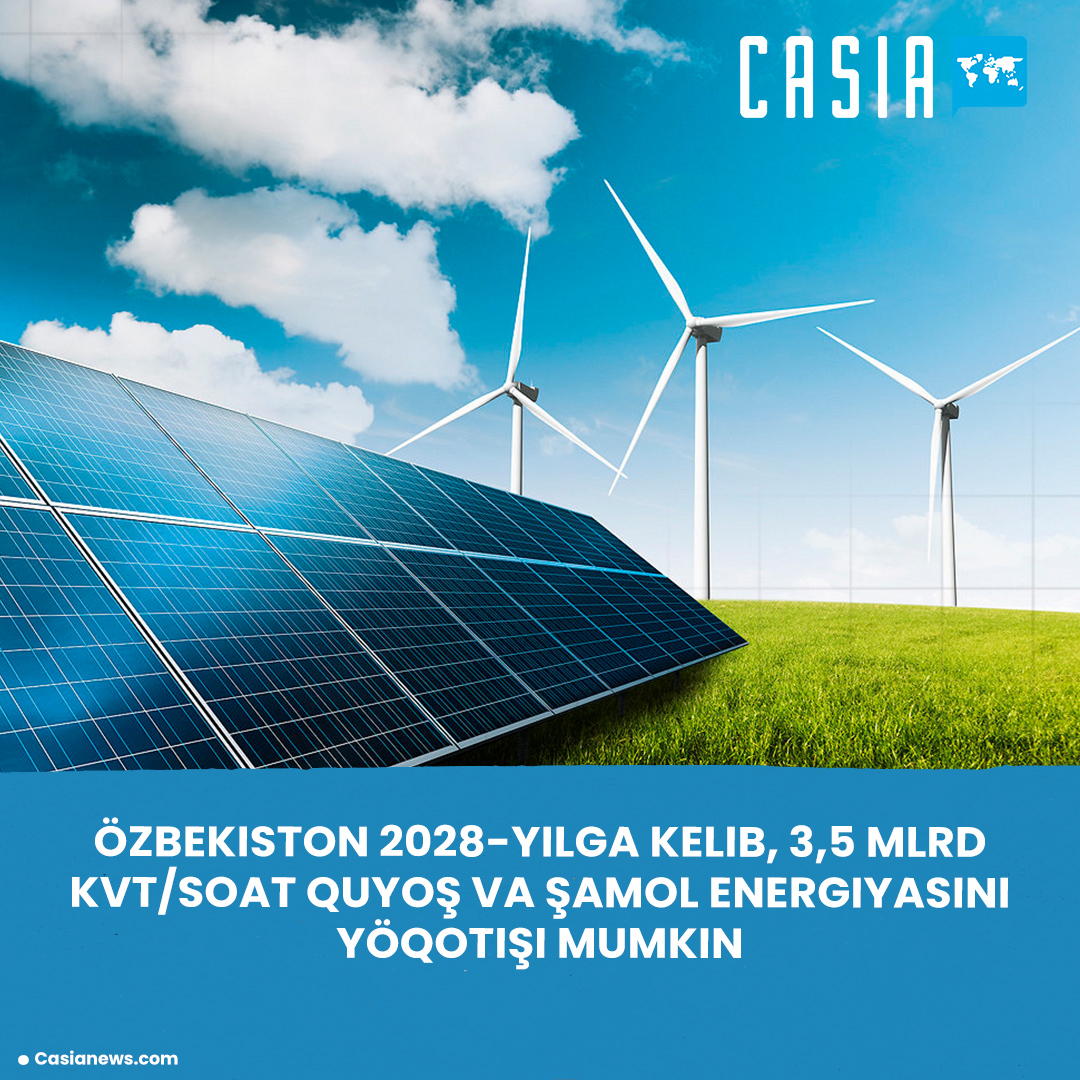
Due to the limited capacity of its electrical grids, Uzbekistan may be unable to utilize up to 3.5 billion kilowatt-hours (kWh) of electricity that could otherwise be generated by solar and wind power plants by 2028. This was stated in a report by the Eurasian Development Bank (EDB).

According to the report, if the electrical grids are unable to fully accommodate the energy being produced and deliver it to consumers, the output capacity of solar and wind power plants may have to be forcibly curtailed.

To address this issue, EDB experts suggest modernizing electrical grids, developing energy storage systems, constructing pumped-storage hydroelectric power plants, and expanding electricity trade among Central Asian nations.

Furthermore, it is projected that the installed capacity of renewable energy sources in Uzbekistan will reach 11.4 gigawatts by 2028. If the construction of new power plants outpaces the development of electrical grids and energy storage infrastructure, the constraints on energy production could increase even further. According to the World Bank’s assessment, alongside the development of green energy in the country, it is also necessary to expand capabilities for the efficient transmission, storage, and delivery of generated electricity to consumers.